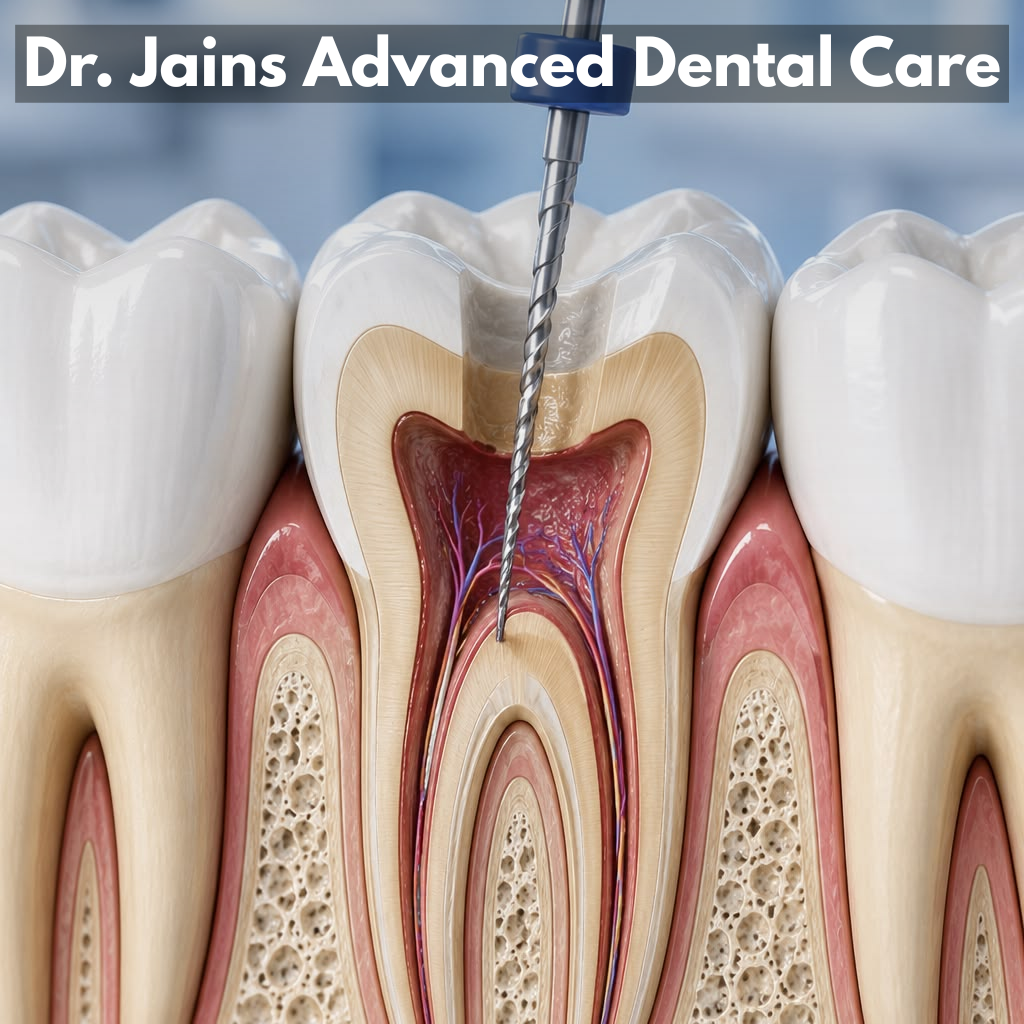
What’s inside your tooth: Under the hard outer layers is a soft centre called the pulp. It holds nerves and blood vessels, and it sits in thin channels (the “canals”) that run down through the roots.
What goes wrong: If a tooth has a deep cavity, a crack, or an injury, bacteria can reach the pulp. The pulp then gets infected and inflamed, which causes severe pain, sensitivity to hot and cold, or swelling. Left untreated, the infection can spread and form an abscess.
What the dentist does: After numbing the area, the dentist removes the infected pulp, cleans and disinfects the canals, and fills and seals them. The tooth is then usually covered with a crown to protect it.
Result: The pain and infection are gone, and you keep your natural tooth and can chew normally. Modern root canals feel much like getting a regular filling, because of the anaesthesia
Root Canal Treatment FAQs
1. What is root canal treatment (RCT)?
Root canal treatment removes the infected or damaged pulp (the soft tissue inside a tooth), cleans and disinfects the canals, and seals them. This lets you keep your natural tooth instead of having it extracted.
2. Is root canal treatment painful?
No. The area is fully numbed with local anaesthesia, so the procedure feels similar to getting a filling. Most of the pain people associate with root canals comes from the infection itself, and the treatment relieves it.
3. How long does a root canal take?
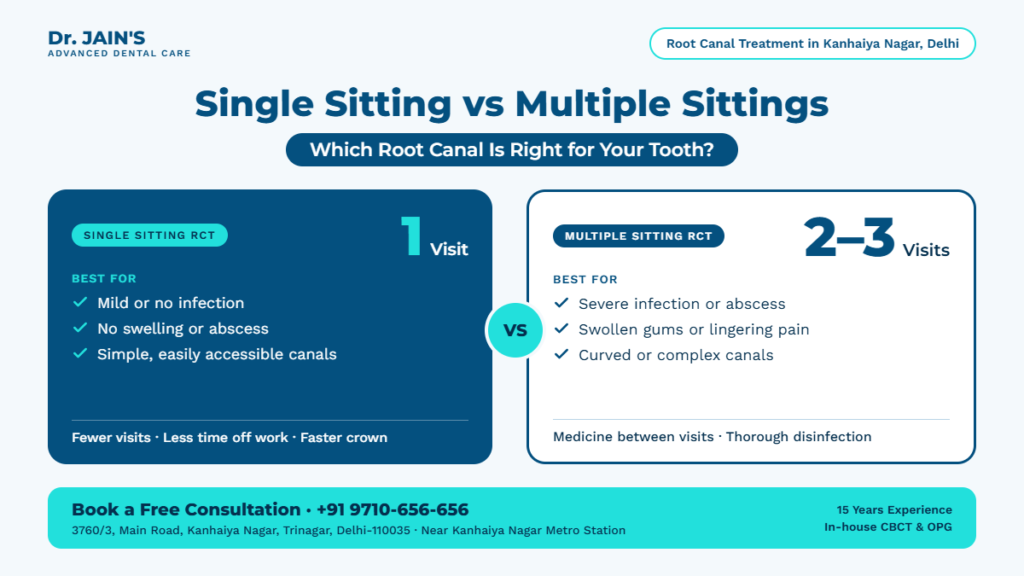
A single-sitting root canal usually takes about 60 to 90 minutes. Complex or severely infected teeth may need 2 to 3 visits. Your dentist decides after an X-ray or CBCT scan.
4. Can I eat after root canal treatment?
You can eat once the numbness wears off, usually after 2 to 3 hours. Until the permanent filling or crown is placed, avoid chewing hard or sticky food on that side and prefer soft foods
5. How much does root canal treatment cost in Delhi?
The cost depends on the tooth (front or back), the number of canals, the level of infection, and whether a crown is needed.
6. Is a crown necessary after a root canal?
In most cases, yes, especially for back teeth. A root canal makes the tooth more brittle, and a crown protects it from cracking and restores normal chewing strength.
7. What are the signs that I need a root canal?
Common signs are severe or lingering toothache, sensitivity to hot or cold, pain when chewing, swollen or tender gums, a darkened tooth, or a pimple-like bump on the gum.
8. How long does a root canal-treated tooth last?
With a good crown and regular brushing, flossing, and check-ups, a root-canal-treated tooth can last many years, often a lifetime.
9. What happens if I delay or avoid a root canal?
The infection can spread to the jawbone and surrounding tissues, causing abscess, swelling, and eventually tooth loss. Early treatment is simpler and more affordable.
10. Is root canal treatment better than extraction?
Saving your natural tooth is usually the best option, since it keeps your bite and jawbone healthy. Extraction may be advised only if the tooth is too damaged to save, and an implant can then replace it.